Stump grinding vs. full stump removal
Both options deal with a leftover stump, but they are not the same job. One is usually faster and cheaper. The other is more complete, but often costs more and disturbs more of your yard.
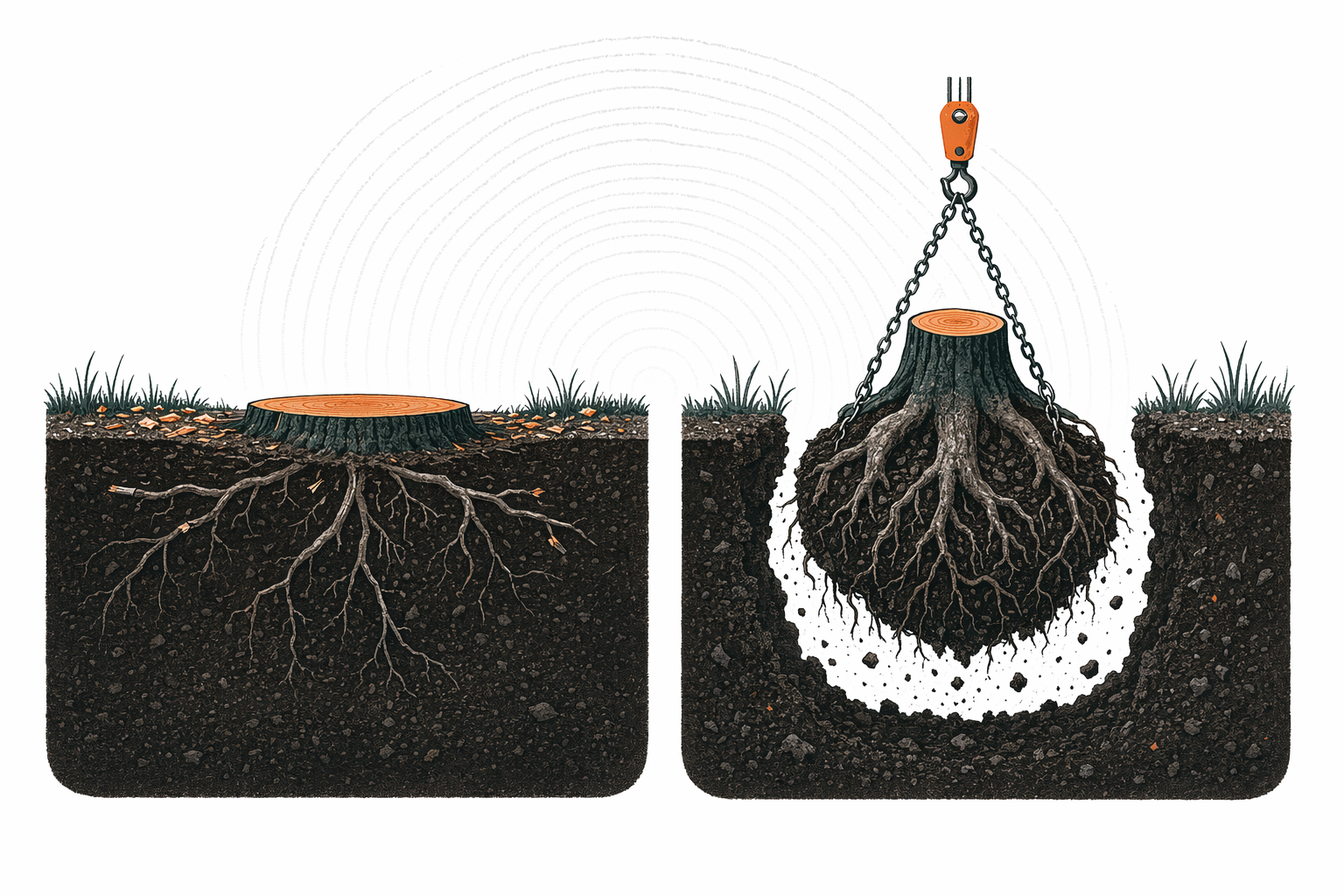
What is the difference?
Stump grinding means a tree company uses a machine to grind the stump down below ground level. In many cases, this is enough if you want the stump out of sight so you can level the area with soil or mulch.
Full stump removal usually means pulling out the entire stump and major root ball. That is a bigger excavation job. It can leave a larger hole, disturb nearby landscaping, and sometimes require more repair after the work is done.
For most homeowners, grinding is the more common choice. It is usually less expensive, less invasive, and faster. Full removal can make sense when you need the area fully cleared for construction, a new driveway, foundation work, or certain replanting plans.
If you are still deciding, ask a licensed and insured tree company to explain what is included. Verify their license and insurance yourself, including liability and workers' compensation. If the stump is tied to a larger tree-health or hazard question, it is smart to prefer an ISA-certified arborist for the assessment. You can also learn more about typical stump grinding costs before you compare estimates.
Cost, mess, and what you actually get
Here is the plain truth: grinding usually costs less than full removal, but the real price depends on the size and species of the tree, its location and access, hazards, debris haul-away, and your area.
Typical homeowner ranges:
- Stump grinding: about $100-$500 for many common jobs
- Full stump removal: often higher than grinding, especially if excavation, root removal, or hard access is involved
- If the stump is part of a larger tree removal job, the company may price it as an add-on
What changes the cost:
- Stump diameter
- Hardwood vs. softer wood
- How deep the grinding needs to go
- Tight access through gates or fenced yards
- Rocks, slopes, utilities, or nearby structures
- Whether they haul away chips and debris or leave them onsite
- Whether roots are spreading into a lawn, walkway, or work area
What the yard may look like afterward:
- Grinding: usually leaves wood chips and a shallow ground-out area that can be backfilled
- Full removal: usually leaves a larger hole and more disturbed soil
- Neither option automatically means your yard is "finish-ready" unless that is listed in writing
Get the full scope and price in writing before work starts. Ask exactly what happens to chips, roots, fill dirt, and surface cleanup. And do not pay the full amount up front.
When stump grinding is usually the better choice
Grinding is often the practical choice if your main goal is to make the stump go away without tearing up the whole yard.
It is usually a good fit when:
1. You want the stump below grade so the area looks better.
2. You plan to add topsoil, seed, or mulch over the spot.
3. You want less digging and less disturbance to nearby landscaping.
4. You want the lower-cost option in many situations.
5. You do not need every major root removed.
Good questions to ask the company:
- How many inches below grade will you grind?
- Will surface roots be cut or left in place?
- Are chips included, removed, or piled for me to use as mulch?
- Will you call in utility locates if needed before the work area is disturbed?
One caution: if there are power lines involved because a damaged tree or root area is near a downed or leaning line, stay back, keep others away, and call the utility company and 911 first. Do not touch anything near the line. For storm situations, read storm damage tree safety.
Also remember that some cities or HOAs have rules about protected or heritage trees. Even after a tree is down, site work can still involve local rules. Check local permit requirements if you are not sure. This is general information, not legal advice.
When full stump removal makes more sense
Full removal is not always necessary, but sometimes it is the right call.
It may be worth the extra cost if:
- You are pouring concrete, building an addition, or installing a driveway, patio, or foundation in that exact spot
- You need the root ball out for major grading or drainage work
- You are dealing with a stump that keeps interfering with planned excavation
- You want the area as clear as possible for a specific project and your contractor says grinding is not enough
Why some homeowners choose it anyway:
- They do not want a buried stump area settling later
- They want fewer leftover large roots near the surface
- They need full access for future site work
But ask about tradeoffs first:
- Will heavy equipment damage irrigation, lawn, pavers, or fences?
- How large will the hole be?
- Is backfill included?
- Will the area need new soil, grading, or reseeding after?
This is where written scope matters. A low price can leave you with cleanup, hauling, and yard repair you did not expect. Compare at least two or three estimates if you can. With TreelineLocal, get matched for free with licensed, insured tree companies, then compare the written details yourself. You choose who to hire and you hold the final payment until the agreed work is done.
How to choose without getting burned
Use this simple checklist before you sign anything:
- Know your goal. Do you just want the stump gone from sight, or do you need the whole root area cleared for a project?
- Verify credentials yourself. Confirm the company's license and active insurance, including liability and workers' compensation.
- Prefer an ISA-certified arborist if there is any question about tree condition, roots, or nearby hazards.
- Get the scope in writing. Depth, cleanup, haul-away, fill, root work, and lawn repair should all be listed.
- Compare total value, not just price. The cheapest bid may exclude debris removal or restoration.
- Watch for storm-chasing door-knockers. After storms, some crews show up uninvited and push for cash up front. Be careful.
- Never pay the full amount up front. A reasonable deposit may be normal, but final payment should wait until the agreed work is complete.
If you want a broader look at pricing across tree jobs, see typical tree-work costs.
If you want the stump out of sight with less yard damage, grinding is usually the simpler and lower-cost choice. If you need the whole stump and root area cleared for building or major excavation, full removal may be worth it. Get written estimates from licensed, insured tree companies, verify coverage yourself, and do not pay in full up front.