How to vet a tree-care company before you hire
Tree work can go wrong fast. A cheap bid from the wrong crew can leave you with property damage, injuries, and a big bill. This guide helps you slow down, ask the right questions, and hire a licensed, insured tree company you feel good about.
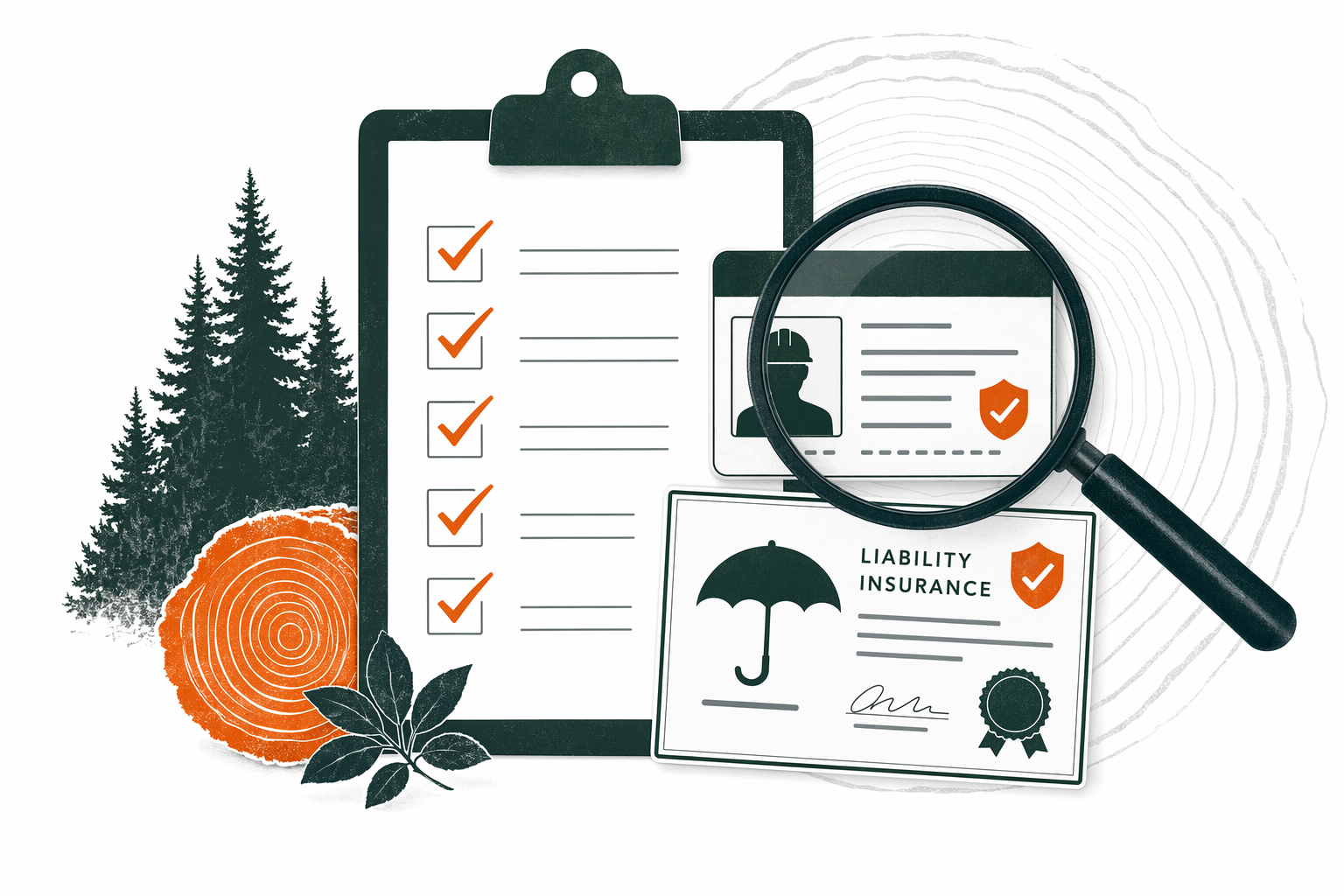
Start with safety, not price
Tree work is high-risk work. People get hurt. Homes, fences, roofs, cars, and utility lines get damaged. That is why the first question is not "Who is cheapest?" The first question is "Are they qualified and properly insured for this exact job?"
If a tree is down or leaning on or near a power line, treat it like a life-threatening emergency. Stay back. Keep children, pets, and neighbors away. Call the utility company and 911 first. Do not touch the tree, the wire, or anything the wire may be touching. For more on storm situations, read storm-damage tree safety.
For normal jobs, your goal is simple:
- Hire a licensed and insured tree company where required in your area
- Verify the license and insurance yourself
- Prefer an ISA-certified arborist when the job involves tree health, risk, or whether a tree should be removed
- Get the scope, cleanup, and price in writing before work starts
- Never pay the full amount up front
TreelineLocal is a free matching service. We help you compare companies. You compare estimates. You choose who to hire. You hold the final payment.
What to check before anyone sets foot on your property
A professional tree company should be ready for basic questions. If they get defensive, rush you, or try to dodge paperwork, that is a warning sign.
Here is what to ask for:
1. Business name and contact information
Get the full legal business name, local address, phone number, and website if they have one. A truck with a first name and cell number is not enough.
2. License information if your state or city requires it
Rules vary by state and city. Some places license tree contractors. Some do not. Ask for the license number and check it with the state or local agency yourself.
3. Proof of insurance
Ask for a current certificate showing:
- General liability insurance
- Workers' compensation insurance
Do not just take their word for it. Read the certificate. Make sure the company name matches. Check the dates. If you want to be extra careful, call the insurance agent listed on the certificate and confirm it is active.
Why this matters: if a worker gets hurt and there is no workers' comp, or if your garage is damaged and there is no liability coverage, you could end up in a very bad position.
4. Who will actually do the work
Ask whether the company uses employees, subcontractors, or a mix. If subs will be on site, ask whether those subs are also insured.
5. ISA certification for assessment
For pruning decisions, hazard concerns, or "Does this tree need to come down?" questions, ask whether an ISA-certified arborist assessed the tree. That matters most for borderline calls and valuable trees.
If you are still figuring out what kind of job you have, these pages can help: tree removal and trimming and pruning.
How to compare estimates like a careful homeowner
A good estimate is not just a price. It is a clear description of what you are buying.
Ask for at least two or three written estimates. Then compare these points line by line:
- Exact work scope: remove, prune, raise canopy, reduce crown, deadwood, stump grinding, haul-away, log cutting, chip removal, site cleanup
- Tree details: how many trees, rough size, and location on the property
- Access issues: backyard only, narrow gate, steep slope, near roof, near pool, near fence
- Equipment plan: climbing, bucket truck, crane if needed
- Protection plan: what they will do to protect lawn, driveway, roof, irrigation, and nearby structures
- Cleanup: whether debris haul-away is included
- Stump work: included or extra
- Permit responsibility: who checks whether a permit is needed for protected or heritage trees
- Payment terms: deposit amount, progress payments if any, and when final payment is due
Watch for vague wording like "trim tree" with no details. One company may be pricing a light pruning. Another may be pricing a full day of technical work. That is how homeowners think they are comparing prices when they are not.
Typical price ranges can help you spot an estimate that seems unrealistically low or unusually high. They are estimates only, not quotes or guarantees. Real cost depends on the size and species of the tree, its location and access, hazards, debris haul-away, and your area.
Typical ranges:
- Tree removal: $400-$2,000+
- Trimming/pruning: $250-$1,200
- Stump grinding: $100-$500
- Emergency or storm cleanup: $500-$5,000+
If you want broader cost context, see tree-work costs.
A very low bid can mean they plan to cut corners on insurance, safety, cleanup, or crew quality. It can also mean they will add charges later.
Red flags that should make you stop
Some warning signs are obvious. Some are not. Here are the ones homeowners regret ignoring:
- They knock on your door right after a storm and say they were "working in the neighborhood"
- They push for cash only or demand a large upfront payment
- They cannot show current proof of liability and workers' comp insurance
- They want to start right away but will not give a written scope
- They say a permit is "not a big deal" without checking local rules
- They promise to "top" a tree or remove huge branches in a way that sounds harsh or outdated
- They use fear: "This tree will definitely fall tonight" without a credible assessment
- Their estimate is far below the others with no clear explanation
- They cannot explain cleanup, stump work, or who repairs accidental damage
After storms, be extra careful with storm-chasing door-knockers. Some demand cash up front, do unsafe work, then disappear when damage or complaints show up.
Also ask about local permit rules. Some cities and towns protect certain species, large trees, or heritage trees. Removing or heavily pruning them may require approval. A reputable company should tell you to check local requirements. That is general information, not legal advice, but it matters.
If you are worried a tree may be dangerous, review signs of a hazardous tree and then ask a qualified company for an on-site assessment.
A simple hiring process you can follow
Use this checklist and you will avoid most of the common mistakes.
1. Describe the job clearly
Take a few photos. Note the tree location, access limits, nearby structures, and whether you want removal, pruning, or stump grinding.
2. Get matched with companies
Use get matched to connect with licensed, insured tree companies in your area at no cost.
3. Ask each company the same questions
Use one list so the answers are easier to compare: license, insurance, who will perform the work, cleanup, permit checks, timing, and payment terms.
4. Review written estimates side by side
Make sure each estimate covers the same scope. If one includes haul-away and another does not, they are not equal.
5. Verify paperwork yourself
Check the license where applicable. Read the insurance certificate. Confirm it is current.
6. Do not rush because of pressure
Urgent sales pressure is not the same as true safety urgency. A real emergency near power lines means call the utility and 911 first. Most other jobs allow enough time to compare.
7. Pay carefully
A reasonable deposit may be normal for some jobs, but never pay the full amount up front. Hold final payment until the agreed work and cleanup are done.
The right hire is not always the cheapest. It is the company that is properly insured, clear in writing, realistic about the work, and professional from the first call.
Before you hire, check the company name, license if required, and active liability and workers' comp insurance. Get the work and cleanup in writing, compare at least 2-3 estimates, never pay in full up front, and stay far away from any tree touching a power line.