Stump grinding and removal
A leftover stump is more than ugly. It can be a trip hazard, attract pests, damage mower blades, and keep you from using part of your yard.
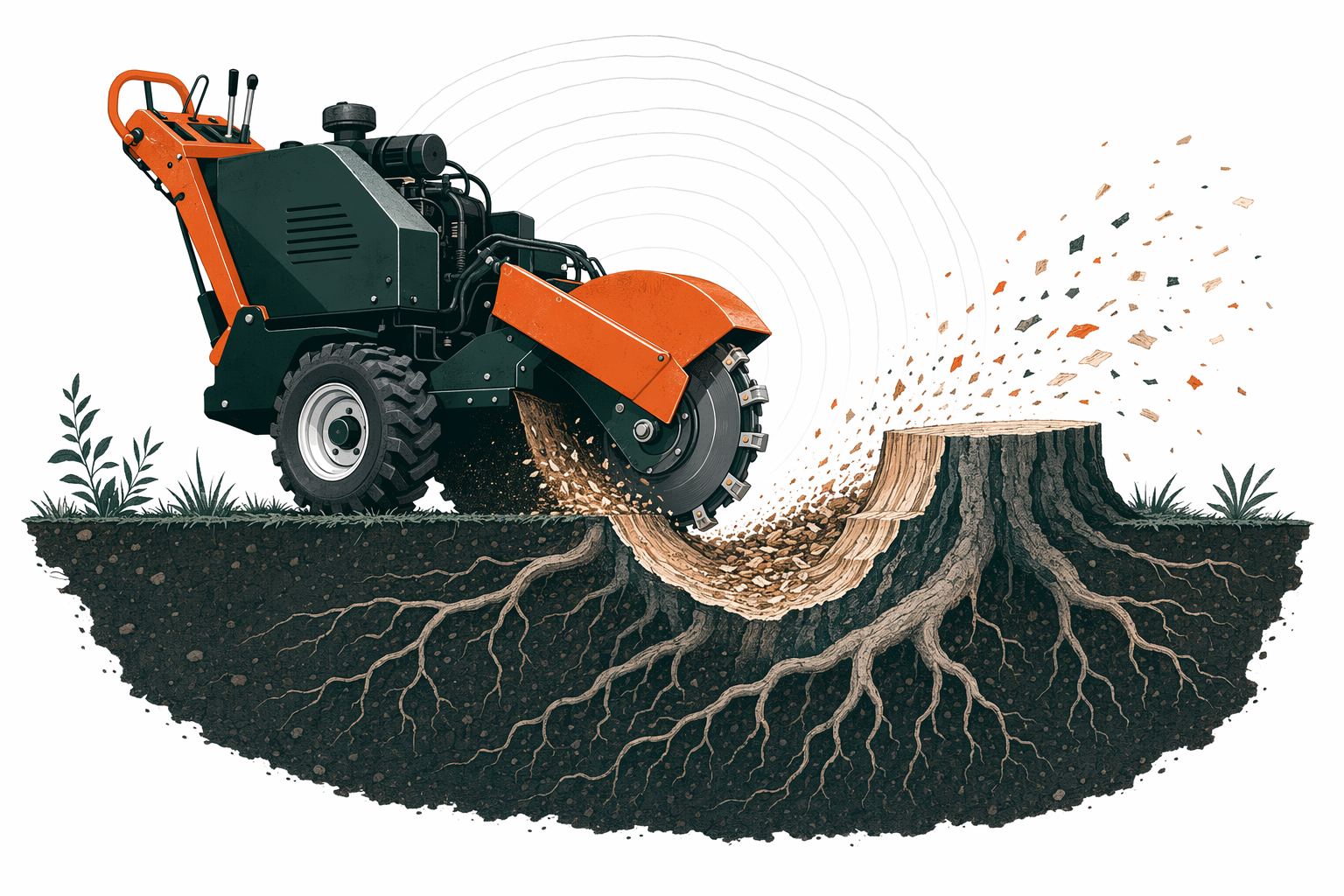
What stump grinding and stump removal really mean
People use these terms like they mean the same thing, but they are different jobs.
Stump grinding means a tree company uses a machine to grind the stump down below ground level. This is the most common option for homeowners. It is usually faster, less disruptive, and less expensive than full removal. In many cases, the roots stay in the ground and slowly break down over time.
Stump removal usually means the stump and major root ball are dug or pulled out. This is a bigger job. It leaves a larger hole and often costs more because it takes more labor, equipment, and cleanup.
A licensed, insured tree company can help you decide which option fits your yard and your plans for the space. If you want to plant grass, improve appearance, or stop tripping over the stump, grinding is often enough. If you plan to build, pour concrete, install a patio, or replant a tree in the exact same spot, full removal may be worth asking about.
If the stump is from a recently removed tree, it also helps to ask whether haul-away, backfilling, and surface cleanup are included in writing. Those details change the final price.
If you still need the tree taken down, start with tree removal and ask for stump work as a separate line item.
Typical cost ranges for stump grinding and removal
There is no one price for every stump. These are typical ranges and estimates, not quotes or guarantees. The real price depends on the size and species of the tree, its location and access, hazards, debris haul-away, and your area.
Typical homeowner ranges:
- Stump grinding: about $100-$500 for many standard residential stumps
- Larger, old, wide, or hard-to-access stumps: can go higher than $500
- Full stump removal with root ball excavation: often costs more than grinding because it is a heavier, more disruptive job
- Multiple stumps: some companies charge per stump, while others discount the per-stump price when several are done at once
What usually affects the price most:
- Stump diameter: Bigger stumps usually cost more.
- Wood type and age: Some species are harder and slower to grind.
- Access: Tight gates, slopes, fences, septic areas, and soft ground can limit equipment.
- Depth: Grinding a little below grade costs less than going deeper for a future project.
- Roots above ground: Surface roots may add time and cost.
- Cleanup: Hauling away chips and filling the hole with topsoil may cost extra.
- Nearby hazards: Irrigation lines, utilities, retaining walls, and foundations all matter.
A low price is not always a good deal if it leaves you with a pile of chips, a shallow grind, or damage to the yard. Ask what depth is included, whether roots are included, whether the hole will be backfilled, and whether debris haul-away is included.
You can read more about common tree-work pricing on our costs page.
How the work is usually done
A professional stump job is not just "show up and grind." Good companies walk the site first, talk through access, and explain what will be left behind.
A typical stump grinding job often looks like this:
- Site check: The crew checks the stump, access path, grade, fences, nearby structures, and visible utilities or irrigation.
- Protect the area: They may set shields or control the work area because wood chips can fly.
- Grind the stump: A stump grinder cuts the wood into small chips and lowers the stump below the soil line.
- Address surface roots if included: Some roots near the stump may be ground if that is part of the written scope.
- Clean up: The company may leave chips on site, rake them level, haul them away, or backfill with soil, depending on your agreement.
For full stump removal, the process is more disruptive. It can involve digging around the stump, cutting larger roots, lifting out the root mass, and then filling the hole. This can disturb a larger part of the yard.
Before work starts, ask these practical questions:
- How deep below grade will you grind?
- Are major surface roots included?
- Will you haul away chips or leave them?
- Will you add soil and level the area?
- Can I plant grass there right away?
- If I want to replant a tree nearby, how close is safe?
Do not assume. Get the scope in writing before any work. You can use our guide to vet a tree company before you hire.
When stump grinding is enough, and when full removal may be better
For many homes, grinding is enough. It improves the look of the yard, removes the obvious obstacle, and is usually the lower-cost option.
Grinding is often a good fit when:
- You want the stump gone from view
- You want to mow safely over the area later
- You want less yard damage from equipment
- You want to spend less than full excavation usually costs
Full removal may make more sense when:
- You are building on that exact spot
- You need deeper excavation for hardscape or foundation work
- You want to replant in the same place
- The stump is causing a specific layout problem that shallow grinding will not solve
One more thing: some homeowners ask for a stump to be removed because they see mushrooms, insects, or new sprouts. Sometimes grinding helps with the nuisance, but the best approach depends on the exact situation. A licensed, insured tree company can assess the job. If you are worried the original tree may have been unstable or diseased, it can also help to prefer an ISA-certified arborist for the assessment.
If the stump is part of broader storm damage or a tree emergency, use extra caution. A stump itself is usually not an emergency, but a broken trunk, hanging limbs, or a tree leaning near a structure or line can be. For active storm concerns, read storm damage tree safety and keep people away from the area.
Important: if any tree or large limb is down on or near a power line, stay back, keep others away, and call the utility company and 911 first. Do not touch it. Do not try to cut or move anything near lines.
How to hire the right company and avoid getting burned
Stump work uses powerful equipment. It can damage utilities, irrigation, fences, and hardscape if done carelessly. Hire carefully.
Use this checklist:
- Hire a licensed and insured tree company. Verify the license yourself if your state or city requires one.
- Verify insurance yourself. Ask for proof of general liability and workers' compensation coverage.
- Prefer an ISA-certified arborist when you want a professional assessment, especially if the site is complicated.
- Get the exact scope in writing. Depth of grind, root treatment, cleanup, haul-away, backfill, and lawn repair should all be listed.
- Compare estimates. You choose who to hire. Matching is free through TreelineLocal, and participating tree companies pay a flat fee to be included.
- Do not pay the full amount up front. A reasonable deposit may be normal for some jobs, but final payment should wait until the agreed work is complete.
- Watch for storm-chasing door-knockers. After storms, some crews go door to door, demand cash, and disappear. Be careful.
Also ask about local rules if the stump is tied to a recently removed protected or heritage tree. Permit rules vary by city and county. That is general information, not legal advice, but it is smart to check before more work is done on the site.
TreelineLocal does not do tree work. We are a free matching service that helps you understand the job and connect with licensed, insured tree companies so you can compare estimates and choose. If you are ready, start here: get matched.
What to do before and after the job
A little prep makes the job smoother and can help avoid surprise charges.
Before the crew arrives:
- Clear cars, toys, and yard items from the access path.
- Mark or mention sprinklers, drip lines, drain lines, invisible dog fences, or landscape lighting if you know where they are.
- Unlock gates and measure narrow access points if the yard is tight.
- Ask where the chips will go if they are being left on site.
After the work is done:
- Walk the area with the company before final payment.
- Check that the grind depth and cleanup match the written scope.
- Ask whether the remaining wood chips should be removed, spread, or topped with soil.
- If you plan to seed or sod the spot, ask how long to wait and what prep is best.
Many homeowners use the leftover chips as mulch elsewhere in the yard. Others want full haul-away for a cleaner finish. Neither is wrong. Just make sure the choice is written down before the work begins.
If the stump came from a tree that had visible cracks, decay, or leaning before removal, you may also want to review common signs of a hazardous tree for other trees on the property.
If you want a stump gone, stump grinding is usually the simpler and cheaper choice, while full removal is a bigger job. Hire a licensed and insured tree company, verify the license and insurance yourself, get the exact scope and price in writing, compare estimates, and do not pay the full amount up front.