What to do after a storm damages your trees
After a storm, trees can look stable when they are not. The safest move is to slow down, keep people away, and bring in a **licensed, insured** tree company, with an **ISA-certified arborist** preferred for assessment.
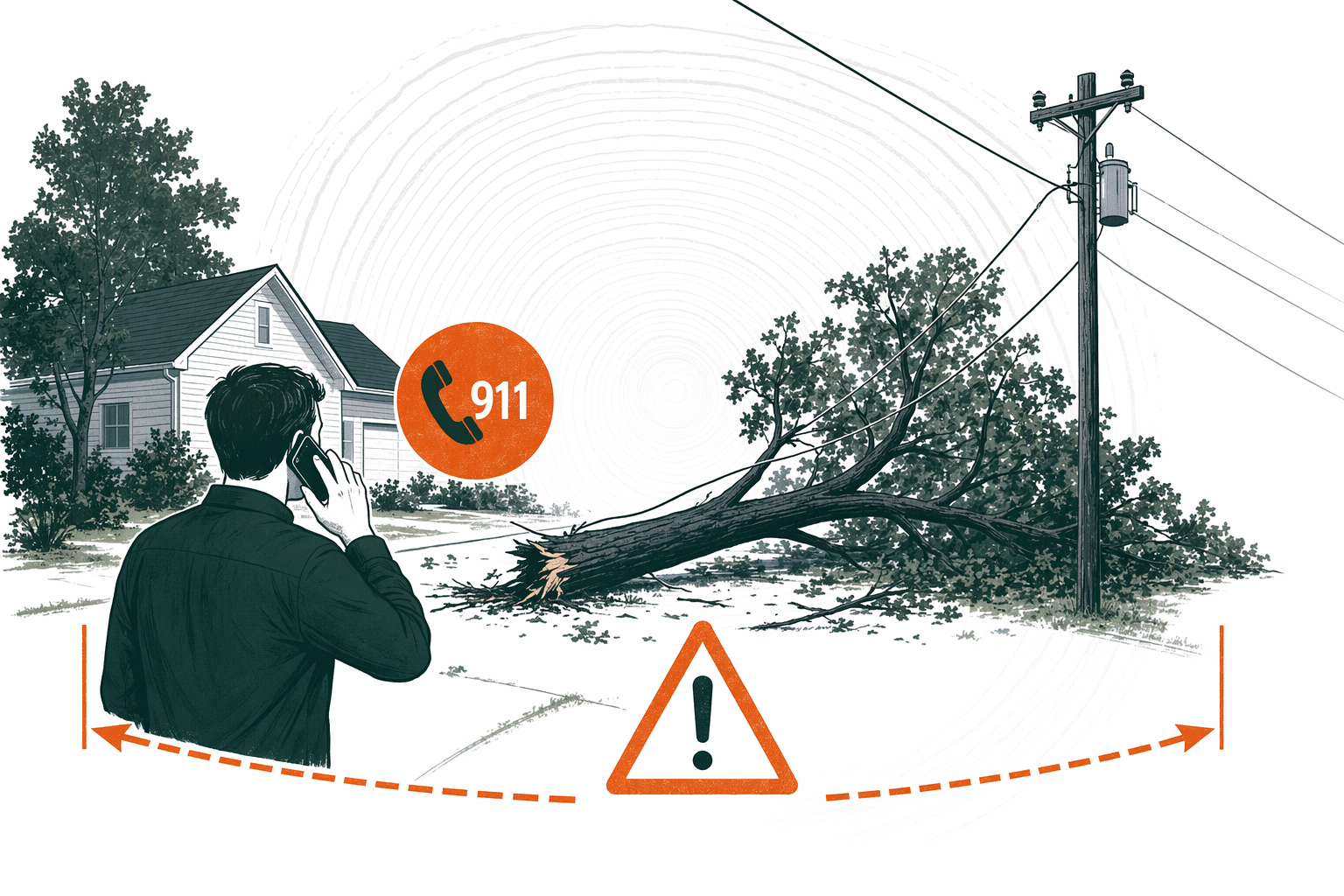
Start with safety, not cleanup
Storm-damaged trees are high-risk. A cracked trunk, hanging limb, split crotch, or tree leaning near a house can fail without warning.
If a tree is down on or near a power line, or leaning into a line, treat it as a life-threatening emergency. Stay back, keep children and pets away, and call the utility company and 911 first. Do not touch the tree, the wire, a fence, a puddle nearby, or anything the wire may be touching.
Even without power lines, do not rush in with a ladder, chainsaw, or rope. Storm damage creates hidden tension in wood. Branches can spring, roll, or drop suddenly. Wet ground and damaged roots also make trees less stable.
A good first move is to:
- Block off the area with cones, tape, or anything visible
- Keep cars out from under damaged limbs
- Take clear photos from a safe distance for insurance and estimates
- Note what the tree hit, if anything, such as a roof, fence, shed, or driveway
- Read more on storm damage tree safety
If the tree has already hit the house, follow your insurer's claim instructions. But do not let a random door-knocker push you into immediate paid work unless it is truly needed to make the site safe.
What you can do now, and what to leave to a pro
Homeowners can do a few low-risk things after a storm. But most tree work should be left to trained crews.
Usually okay for a homeowner:
- Pick up small twigs and light debris from open ground
- Move outdoor furniture or vehicles away from a damaged tree if it is safe to do so
- Take photos and write down when the storm happened
- Cover a roof opening with a tarp only if your roofer or insurer says it is safe and you can do it from the ground or by another low-risk method
Do not DIY if any of these are true:
- A limb is hanging overhead
- The trunk is cracked or split
- The tree is leaning more than before the storm
- Roots are lifting or the soil is mounded on one side
- The tree is near a house, fence, driveway, neighbor's property, or road
- The tree is close to any utility line
- You would need a chainsaw, ladder, climbing gear, or rigging
For the actual assessment, it is smart to prefer an ISA-certified arborist. Some storm damage can be corrected with pruning or cabling recommendations, while other trees need removal. TreelineLocal can help you get matched for free with companies that are licensed and insured so you can compare options yourself.
A simple 5-step plan for the next 24 hours
1. Make the area safe. Keep everyone back. Do not park, walk, or let pets under damaged limbs.
2. Check for emergency conditions. If there is contact with a power line, sparking, fire, blocked road danger, or immediate risk to life, call the utility and 911 first.
3. Document the damage. Take wide and close photos from safe ground. Get shots of the tree, the base, any cracked limbs, and any damage to structures.
4. Get 2-3 written estimates. Ask each company to describe the scope in writing. Is it emergency stabilization, pruning, full tree removal, haul-away, stump work, or all of the above? Real price depends on the size and species of the tree, its location and access, hazards, debris haul-away, and the area.
5. Verify before hiring. Use this checklist:
- Confirm the company is licensed if your state or locality requires it
- Ask for proof of general liability insurance and workers' compensation
- Verify the insurance yourself with the carrier when possible
- Ask whether an ISA-certified arborist will assess the tree
- Get the cleanup details, timeline, and total scope in writing
- Never pay the full amount up front
If you want help finding companies to compare, you can get matched for free. You compare estimates. You choose who to hire. You hold the final payment until the agreed work is done.
What storm tree work usually costs
After a storm, price depends on danger and difficulty more than on the calendar. Emergency work costs more because crews may need to respond fast, bring extra equipment, manage traffic, or work around structures.
Typical estimate ranges for homeowners:
- Tree removal: about $400-$2,000+ for many jobs, with large or complex removals higher
- Trimming or pruning: about $250-$1,200
- Stump grinding: about $100-$500
- Emergency or storm cleanup: about $500-$5,000+
Those are not quotes or guarantees. The real price depends on:
- Tree size and species
- Whether the tree is fallen, leaning, split, or still standing
- Access for trucks, climbers, or cranes
- Proximity to a house, fence, roof, pool, road, or utility lines
- Amount of debris and haul-away
- Local labor and disposal costs
Sometimes pruning is enough. Sometimes a tree is too unstable to save. Sometimes the urgent part is just making the area safe now, with full cleanup later.
If you want a broader pricing picture, see tree service costs or compare needs like emergency tree service and stump grinding.
How to avoid getting burned after a storm
Storms bring honest companies and bad actors. Be careful with anyone who shows up uninvited and pressures you to sign on the spot.
Watch for red flags:
- Door-knockers who say they were "working nearby" and can do it for cash today
- Demands for a large deposit or full payment up front
- No proof of liability insurance or workers' comp
- Refusal to put scope, debris removal, or price in writing
- Claims that a permit is "never needed"
- Pressure to skip your insurer, skip other estimates, or decide immediately
In some areas, removing certain protected, heritage, or specimen trees may require a local permit, even after storm damage. Rules vary by city and county. Ask the company what local permit rules may apply, and verify with your municipality if needed. This is general information, not legal advice.
A trustworthy company will explain what is urgent, what can wait, and why. They should also tell you if a damaged tree shows signs it may fail soon, such as root plate lifting, fresh trunk cracks, or major limbs torn from the crown. For more warning signs, read signs of a hazardous tree.
If you are comparing companies, our guide on how to vet a tree company can help you ask the right questions.
After a storm, keep people away from damaged trees, especially near power lines. Get 2-3 written estimates from licensed, insured tree companies, prefer an ISA-certified arborist for assessment, verify insurance yourself, and never pay the full amount up front.