Lot and land clearing
Lot clearing can mean anything from brush cleanup to removing multiple trees so a site is ready for fencing, grading, a driveway, or a new build. The right crew, the right insurance, and a clear written scope matter a lot because this is high-risk work with expensive mistakes if it goes wrong.
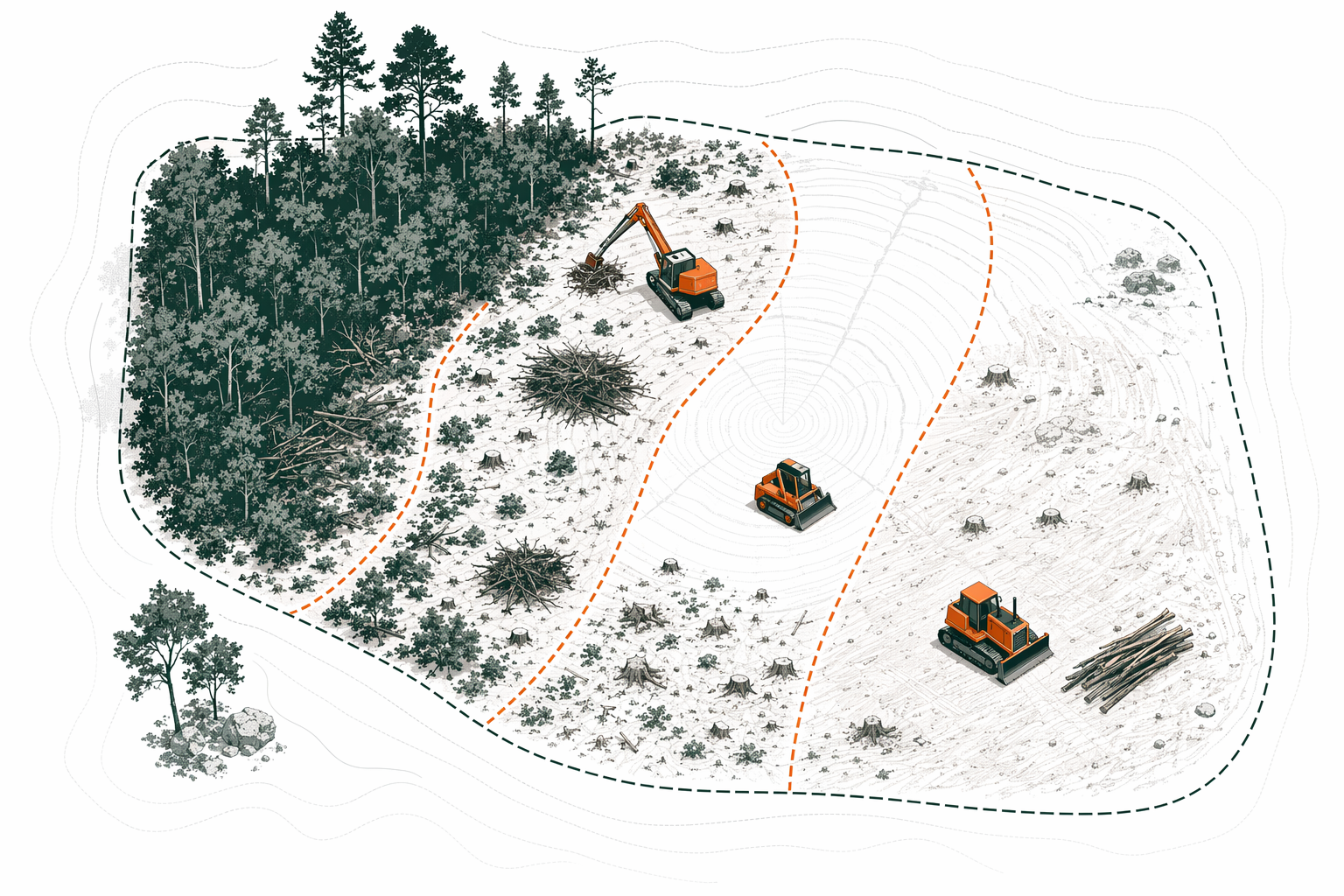
What lot and land clearing usually includes
Lot clearing is site preparation, not just cutting down a few trees. On a residential property, the work may include:
- small tree and brush removal
- selective tree removal to open space for a home, garage, shed, septic area, driveway, or fence line
- vine, sapling, and overgrowth clearing
- deadwood and storm debris cleanup
- stump grinding or stump removal
- chipping, hauling away debris, or leaving mulch on site if you want it
- rough access clearing so other trades can get in safely
A good tree company will want to know exactly what must stay and what must go. That matters if you are trying to keep shade trees, privacy screening, drainage patterns, or trees near a future foundation.
If your job is mainly removing one or several trees, see tree removal too. If the job includes roots or old stumps in the way, stump grinding may be part of the scope.
Important: TreelineLocal is a free matching service. We help you connect with licensed, insured tree-care companies. We do not do the clearing work ourselves, and we do not give arboricultural, engineering, electrical, or legal advice.
If any tree is leaning on or near a power line, or a line is down, stay back, keep others away, and call the utility company and 911 first. Do not touch the tree, the wire, fencing, puddles, or debris nearby.
Typical lot clearing cost for homeowners
Prices vary a lot because no two lots are the same. These are typical ranges and estimates, not quotes.
For homeowner jobs, you may see costs like these:
- light brush clearing on a small area: a few hundred dollars to around $1,500+
- removing one tree as part of site clearing: often about $400-$2,000+ per tree, with large or difficult removals costing more
- trimming or pruning trees you plan to keep: often about $250-$1,200
- stump grinding: often about $100-$500 per stump
- storm-related cleanup or emergency access clearing: often about $500-$5,000+ depending on damage and hazards
- clearing a larger build area with multiple trees, brush, hauling, and stump work: often several thousand dollars and up
The real price depends on:
- Tree size and species. Bigger trees take more time, equipment, and labor. Dense hardwoods can cost more.
- How many trees and how thick the brush is. A lot with tangled understory, vines, and saplings is slower than open ground.
- Location and access. Tight backyards, slopes, wet ground, fences, septic fields, and limited truck access raise the price.
- Hazards. Nearby homes, sheds, retaining walls, pools, and overhead lines change how the work must be done.
- Debris handling. Chipping and leaving mulch on site may cost less than full haul-away.
- Stumps and roots. Cutting trees flush is different from grinding or fully removing stumps.
- Your area. Local labor, disposal fees, dump fees, and permit rules vary.
For more price context, see cost guides. The best way to know your real range is to get written estimates for the same scope from more than one licensed and insured company.
How the work is usually done
A professional lot-clearing job should start with a walk-through and a written plan. The goal is to avoid confusion, property damage, and surprise charges.
A typical process looks like this:
- Mark the work area. You and the estimator identify what stays, what goes, and where access will be.
- Check local rules. Some cities, towns, and HOAs have rules for protected, heritage, or street trees. There may be permit requirements before removal. Ask the company what permits may apply, and verify with your local building or planning office yourself.
- Protect the site. The crew may set up cones, signs, mats, or plywood to reduce lawn and driveway damage.
- Cut and remove vegetation in stages. Brush and small growth often come out first. Larger trees may be climbed, rigged, or removed with specialized equipment depending on access and safety.
- Process debris. Wood may be chipped, cut into sections, stacked, hauled away, or left by agreement.
- Address stumps if included. Stumps may be left, cut low, or ground below grade depending on your plan for the site.
- Final cleanup. The crew should rake or blow the area and confirm the scope is complete.
Ask these practical questions before work starts:
- Will they use heavy equipment, and if so, how will they protect the yard, driveway, and irrigation?
- Is haul-away included?
- Are stumps included or extra?
- Will they leave wood chips or logs if you want them?
- What is the plan if they find fencing, hidden debris, or access issues?
- Who is responsible for permits if needed?
If a tree looks cracked, hollow, dead, or unstable, ask for an assessment by an ISA-certified arborist. You can also review common warning signs here: signs of a hazardous tree.
How to hire the right tree company for clearing work
This is where many homeowners get burned. Do not hire based on the lowest number alone.
Always hire a licensed and insured tree company. Then verify the coverage yourself. Ask for:
- business license if your state or locality requires it
- general liability insurance
- workers' compensation insurance
- confirmation of who will actually be on site if subcontractors are involved
Prefer a company with an ISA-certified arborist involved when the job includes saving valuable trees, assessing risky trees, or planning work near structures.
Before you sign anything, get the scope and price in writing. The written estimate should say:
- the exact area to be cleared
- which trees are being removed and which are staying
- whether trimming, stump grinding, haul-away, and cleanup are included
- access notes and equipment notes
- permit responsibility if relevant
- the total price or clear unit pricing
- payment terms
Never pay the full amount up front. A reasonable deposit may be normal for some jobs, but you should hold final payment until the agreed work is complete.
Watch for red flags:
- door-knockers after a storm who say they are "working the neighborhood"
- pressure to pay cash only up front
- no written estimate
- no proof of insurance
- vague promises like "we'll clean everything" without a detailed scope
- a bid that is far lower than everyone else for no clear reason
You can use our hiring guide to compare companies and ask better questions. If you want help connecting with companies, get matched for free. You compare estimates, you choose who to hire, and you hold the final payment.
Smart planning tips before you clear a lot
Clearing too much can hurt your budget and your property. A little planning can save real money.
- Keep the trees you truly want before the machines arrive. Mark them clearly and talk through root protection if construction will follow.
- Think about drainage and shade. Removing too many trees at once can change water flow, sun exposure, and privacy.
- Coordinate with other trades. If a survey, septic design, fence layout, or driveway plan is coming, do that first so you do not clear the wrong area.
- Ask about debris options. Keeping chips on site may save money and help with erosion control in some areas.
- Take photos before work starts. Good records help if there is confusion about scope or property condition.
- Plan for emergency situations. After storms, damaged trees can shift without warning. Review storm damage tree safety if the site has storm-related damage.
An illustrative example: a homeowner wants to open a backyard for a future garage. One estimate includes brush clearing only. Another includes brush, two medium tree removals, stump grinding, haul-away, and driveway protection. The first price looks cheaper, but it is not the same job. This is why comparing matching scopes matters more than comparing the bottom line alone.
TreelineLocal's role is simple: we help homeowners, including non-native English speakers, understand the job and connect with qualified local tree companies at no cost to the homeowner. Participating companies pay a flat fee to be listed and matched.
Lot clearing can get expensive fast if the scope is vague. Mark what stays and what goes, ask for written estimates from licensed and insured tree companies, verify insurance yourself, check permit rules, and never pay the full amount up front.